
×
A. Cervical stitch is an operation where a stitch is placed around the cervix (neck of the womb). It is usually done between 12 and 24 weeks of pregnancy although occasionally it may be done at later stages in pregnancy.
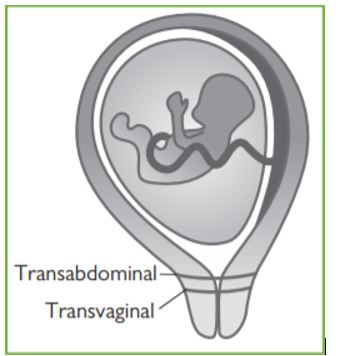
A cervical stitch is more commonly put in vaginally (transvaginal) and less commonly by an abdominal route (transabdominal)
A. Babies born early (before 37 completed weeks of pregnancy) have an increased risk of short- and long-term health problems.
There are many possible causes for giving birth early. One possible cause is because your cervix shortens and opens too soon. A cervical stitch may help to prevent this.
You should be referred to a specialist early in your pregnancy if:
Your healthcare team may arrange for you to have transvaginal ultrasound scans to measure your cervix.
If it is found to be short (less than 25 mm long), you may be offered:
A. Your obstetrician should discuss the benefits and risks in your individual situation. Sometimes a cervical stitch is not advised because it may carry risks to you and it would not improve the outcome for your baby. This may be if:
If you are pregnant with more than one baby, there is no definite evidence to show that a cervical stitch will prevent you going into labour early.
A. Insertion of a cervical stitch takes place in an operating theatre.
You may have a spinal anaesthetic where you will stay awake but will be numb from the waist down, or you may be given a general anaesthetic where you will be asleep. Your team will discuss the best option for you.
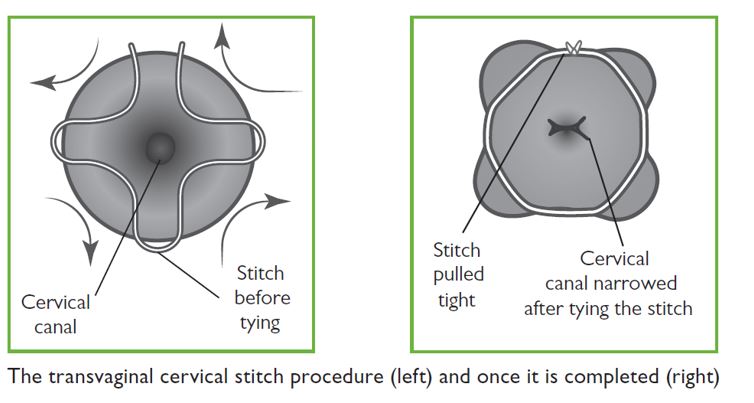
In the operating theatre, your legs will be put in supports and sterile covers will be used to keep the operating area clean. The surgeon will then insert a speculum into your vagina, hold the cervix and put a stitch around it. The stitch is then tightened and tied, helping to keep the cervix closed.
The operation, which is called a ‘transvaginal cerclage’, takes less than one hour. You may also have a catheter (tube) inserted into your bladder that will be removed once the anaesthetic has worn off.
You will be offered medication to ease any discomfort after the surgery. You are likely to be able to go home the same day although you may be advised to stay in hospital longer.
A. This involves an operation to put a stitch around your cervix, through your abdomen, and is also called a ‘transabdominal cerclage’.
It is an uncommon procedure but may be recommended if a vaginal cervical stitch has not worked in the past or if it is not possible to insert a vaginal stitch.
It is done either before you become pregnant or in early pregnancy.
It may be done through a cut on your abdomen or via keyhole surgery. This sort of stitch is not removed and your baby would need to be born by caesarean section.
A. Occasionally, you may be offered a stitch as an emergency procedure after your cervix has already opened up, to help prevent having a late miscarriage or preterm birth. This is called a ‘rescue stitch’ and your healthcare team will discuss the risks and benefits of this with you. This type of stitch has higher risks and doesn’t always work.
A. The risks of surgery include:
The stitch may not always work and you might still experience a late miscarriage or preterm birth. A cervical stitch does not increase your chances of needing induction of labour or a caesarean section.
A. After the operation, you may have some vaginal bleeding or brownish discharge for a day or two.
Once you recover from the operation, you can carry on as normal for the rest of your pregnancy. Resting in bed is not recommended. You can have sex when you feel comfortable to do so.
A. You should contact your healthcare team if you experience any of the following:
A. Your stitch will be taken out at the hospital. This will normally happen at around 36–37 weeks of pregnancy, unless you go into labour before then.
You will not normally need anaesthetic for removal of the stitch. A speculum is inserted into your vagina and the stitch is cut and removed.
It usually takes just a few minutes and you may experience some discomfort. Occasionally, you will be advised by your obstetrician that you will need an anaesthetic for removal of the stitch.
You may notice some blood staining or vaginal spotting afterwards. This should settle within 24 hours but you may have a brown discharge for longer. If you have any concerns, you should tell your obstetrician.
A. If you go into labour with the cervical stitch still in place, you should contact your maternity unit straight away. It is important to have the stitch removed to prevent damage to your cervix.
If your waters break early but you are not in labour, the stitch will usually be removed because of the increased risk of infection. The timing of this will be decided by the healthcare team looking after you.
A. The key points are:


